Paraffin vs soy vs beeswax: what your candle is made of decides how long, how clean and how sweet it burns.
All wax is not equal. Paraffin, the cheapest common wax, is a petroleum by-product; it burns fast, often smokes, and can leave a grey film of soot on walls and ceilings over time.
Soy wax — pressed from soybeans — burns roughly a third longer, with a cooler flame and barely any soot. It also holds scent evenly, so the last hour smells like the first.
Beeswax goes further still: the densest natural wax, a naturally honeyed scent even unscented, and a warm golden flame. It is the oldest candle wax in the world, and still the best one.
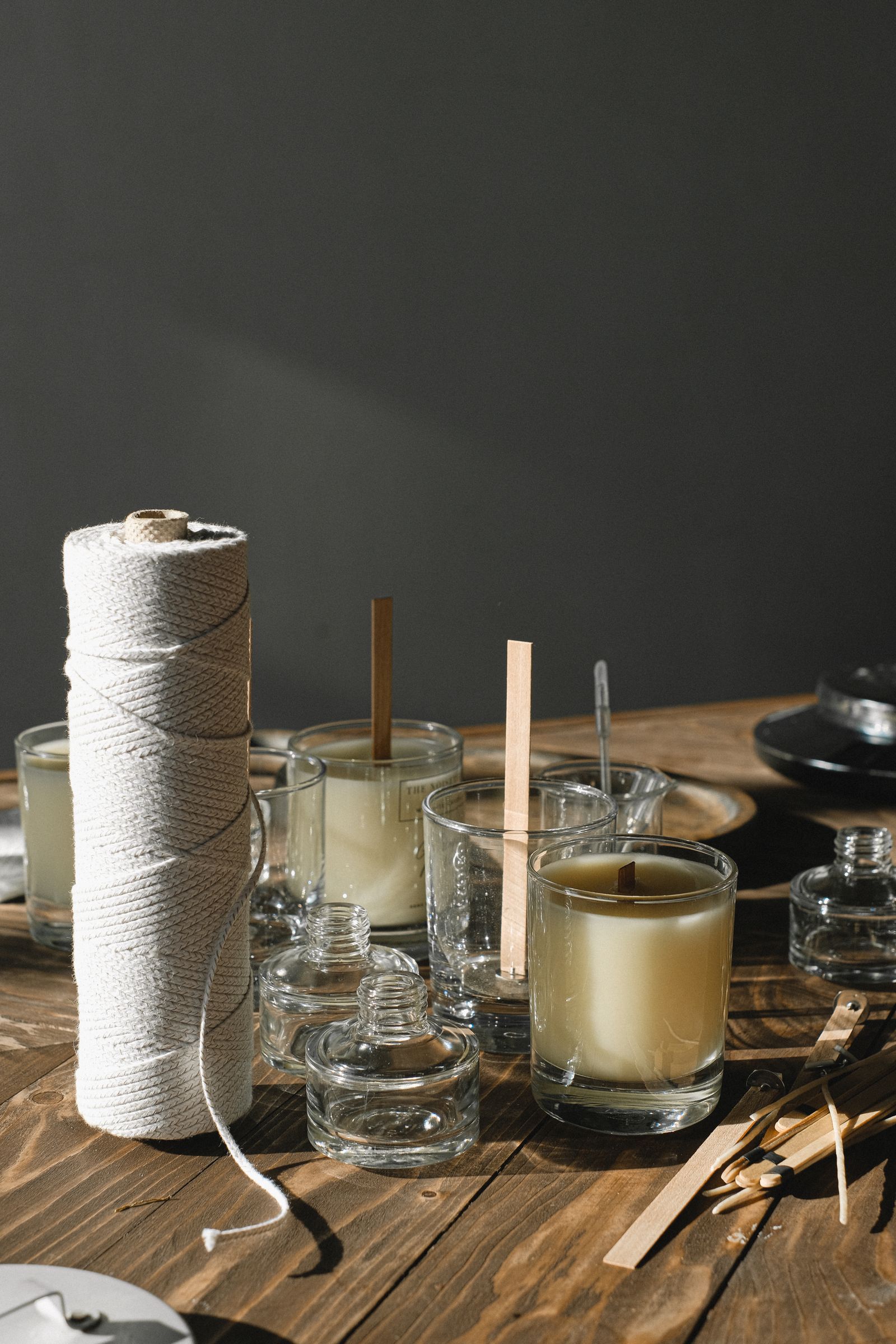
That is why every Thistlewick candle is poured in small batches from soy or beeswax, wicked with cotton or wood, and cured for two weeks before it ships. Cleaner wax means you can actually burn the candle every day — which is rather the point.